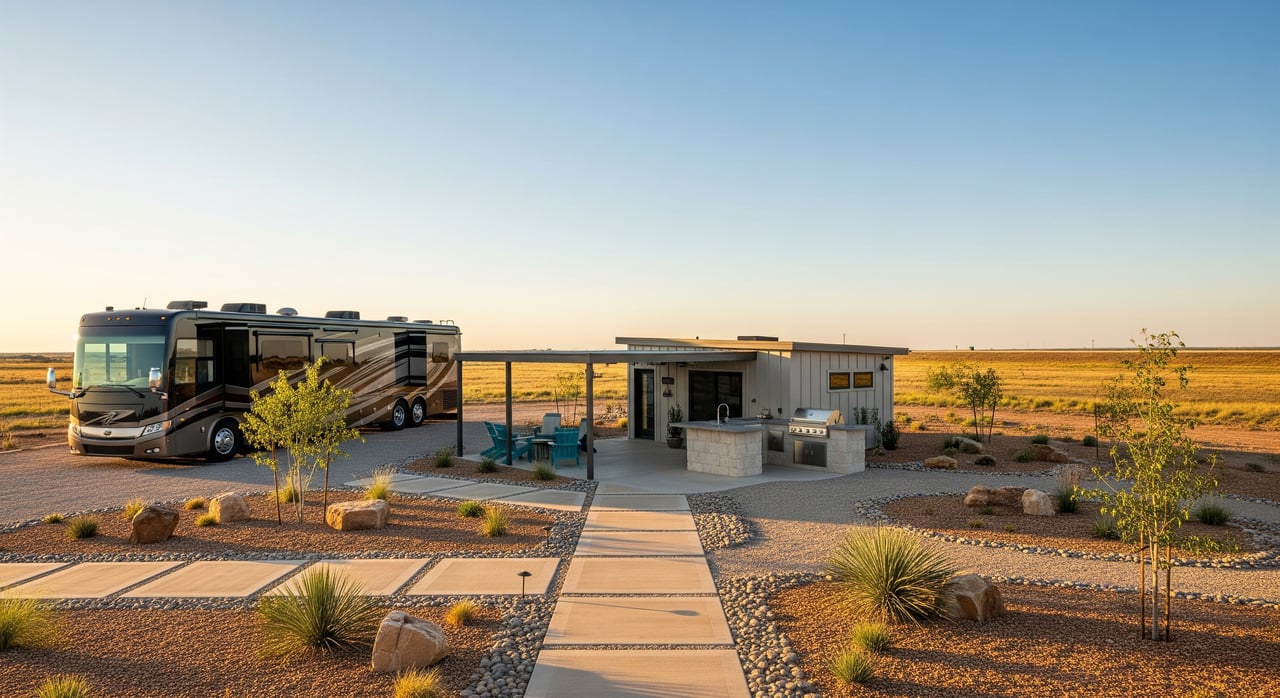
Thinking about parking your RV near the I‑20 and US 285 crossroads around Barstow? You are not alone. In this part of West Texas, RV living is popular with travelers, oilfield crews, and landowners who want flexible housing. The key question is whether an RV park or a private yard is the smarter move for you.
In this guide, you will learn how to evaluate sites around Barstow, what permits may apply, what to check on utilities and access, and how to compare costs and risks. You will also get a simple checklist to make a confident choice. Let’s dive in.
Barstow crossroads: what to expect
Barstow is a small incorporated community in Ward County, set near I‑20 close to the Reeves County line. It sits a short highway drive from larger service hubs like Pecos and Monahans. Get your bearings with a quick look at Barstow’s location and context and nearby town distances from Roadside Thoughts.
If you plan to place or keep an RV here, expect rural surroundings, highway access, and service trips to nearby towns. That mix works well for many, but it means you should verify utilities, access, and local rules before you commit.
RV park vs. private yard: quick comparison
- RV park pros: ready hookups, sewer management, on‑site support, monthly pricing, and easy move‑in. Cons: monthly fees and park rules. Local parks list sample monthly rates in about the 500 to 800 dollar range, which you can use for comparison. See current examples at Hwy 285 RV Park in Pecos.
- Private yard pros: privacy, control, and long‑term savings if you will stay for years. Cons: upfront costs for power, water, and septic, plus permitting and maintenance.
- Developer angle: if you are considering a small RV park, plan for more approvals and higher infrastructure costs than a single private setup.
Know the rules before you park
Who to call first
- City of Barstow: If the lot is inside city limits, ask about RV living or parking rules, occupancy limits, and building or sewer permits. Start with Barstow’s city context, then call city hall.
- Ward County: For unincorporated parcels, contact county offices in Monahans for septic, driveway, and records. You can find county contact information through the Ward County tax office page.
- TCEQ: For water and wastewater thresholds that apply to RV parks, begin with TCEQ’s RV Parks: Compliance Resources.
When state rules kick in
- Commercial RV parks can trigger public water system regulation and wastewater or septic approvals, and may need a construction stormwater permit if you disturb one acre or more. TCEQ’s page outlines the thresholds and who regulates what. Review TCEQ’s RV park guidance early in your planning.
Yard placement basics
- Many small cities limit permanent RV residency even on private lots. Do not assume long‑term habitation is allowed. Check local ordinances and permits. For a sense of how cities write these rules, see this example of “permanent occupancy prohibited” language in a municipal code on ecode360.
Site logistics near I‑20 and US 285
Utilities and hookups
- Electricity: Confirm available service and the cost to add a meter or upgrade capacity. Rural line extensions or transformers can add time and cost.
- Water: Verify whether you will use a well or city water. If you plan to serve multiple RVs, TCEQ public water system rules may apply. Start with TCEQ’s RV park guidance.
- Sewage: For a single RV on a yard, you will likely need a properly sized septic system. For multiple RVs or a park, expect on‑site sewage facility review or other wastewater authorization. TCEQ’s guide explains the paths.
Pads, access, and maneuvering
- Confirm safe driveway access to your parcel and enough room to turn the largest rig you plan to host. If you are creating a new access point to a state highway, factor time for permits.
- Stabilize parking areas with concrete or compacted aggregate to prevent rutting.
Connectivity that works
- Check cell and internet before you buy. Use the FCC National Broadband Map guide to see listed providers, then run real‑world speed tests on site for each carrier.
Weather and hazards to plan for
- West Texas brings high winds, dust storms, and occasional severe thunderstorms. The National Weather Service issues dust storm and severe weather alerts that include Ward County and the I‑20 corridor. Review current and historic alerts with the NWS warning feed for dust storms and build a safety plan.
- Flood risk matters for pads and utilities. Before you purchase, pull a parcel‑level view from FEMA’s Flood Map Service Center.
What it costs: park rent, yard build‑out, or a small park
RV park monthly comparisons
- Use current local park pricing as your benchmark. Nearby parks serving Pecos and Monahans list monthly rates in the 500 to 800 dollar range depending on site type. See examples and amenities at Hwy 285 RV Park.
Private yard build‑out
- Budget for power service, water source or tie‑in, a permitted septic system, and a stable pad or driveway. Costs depend on distance to utilities, soil conditions, and site work. For shorter stays, park rent is often cheaper. For multi‑year use, a yard can become economical once your upfront investment is spread over time.
Building a small RV park
- Industry estimates put basic RV park development in a wide range, roughly 15,000 to 50,000 dollars per site depending on hookups, wastewater, paving, and amenities. See a summary of cost drivers in this Chron overview. Plan density and circulation carefully so rigs can move safely and comfortably.
A decision checklist for Barstow parcels
Use this quick checklist on any property you are considering:
- Rules and zoning: Is long‑term RV habitation allowed, and would a commercial RV park be permitted on this parcel? Start with city or county, then confirm with TCEQ’s RV park guidance.
- Utilities feasibility: What will it take to deliver power, water, and wastewater to your RV or park sites, and who permits each step?
- Access and safety: Can big rigs enter and turn safely, and will you need a new driveway permit for a state highway?
- Flood and hazards: Pull the parcel’s FEMA map at the Flood Map Service Center and note storm and dust risks from the NWS.
- Cost comparison: Stack current park rates against your total build‑out and maintenance costs. Use local examples like Hwy 285 RV Park to estimate monthly spend.
- Documentation: Keep records of permits and approvals. If you sell later, clear documentation helps buyers and speeds due diligence.
For sellers along I‑20 and US 285
Highlight any existing RV pads, electrical pedestals, permitted septic, and water access. Disclose known local limits on RV residency and whether your septic or water setup is permitted for one RV or multiple. Pointing buyers to clear approvals can increase confidence. For context on how cities often frame occupancy rules, see this sample code on ecode360.
Next steps
- Call the local authority first: Barstow city hall for in‑town parcels or Ward County offices via the county tax office page for unincorporated land.
- Talk to regulators early: Review TCEQ’s RV park resources to understand water and wastewater thresholds.
- Visit each site: Drive the approach with your RV, check maneuvering space, and test cell service using the FCC map guide.
- Check risk: Pull FEMA flood maps for the exact parcel at the Flood Map Service Center and plan for West Texas wind and dust.
- Compare costs: Use real park pricing like Hwy 285 RV Park as your benchmark, then get quotes for power, water, septic, and pad work.
If you want a grounded, local read on a specific parcel along I‑20 or US 285, reach out to Marisa Florez, Realtor Golden Door Realty for site‑by‑site advice and market comps.
FAQs
Can I live full time in an RV on my lot in Barstow?
- It depends on local rules. Many small cities limit permanent RV residence on private lots. Start with Barstow city hall for parcels in town and Ward County for rural parcels, and review how cities often phrase these limits in this ecode360 example.
What permits do I need to build a small RV park near Barstow?
- Expect to address water supply, wastewater or septic, possible construction stormwater, and local approvals. TCEQ explains thresholds and who regulates what in its RV park guidance.
How do I compare RV park rent to building hookups in my yard?
- Use current local park rates as a baseline and estimate your one‑time costs for power, water, septic, and pads. For short stays, park rent is often cheaper. For multi‑year use, a yard can pencil out. Check local examples like Hwy 285 RV Park.
How do I check internet and cell coverage before I buy land?
- Start with the FCC National Broadband Map guide, then test speeds on site for each carrier to confirm real‑world performance.
Do dust storms and severe weather affect RV living near I‑20?
- Yes. High winds and dust can reduce visibility and damage unsecured items, and storms can bring hail or localized flooding. Monitor the NWS dust storm warnings and plan for shelter and tie‑downs.