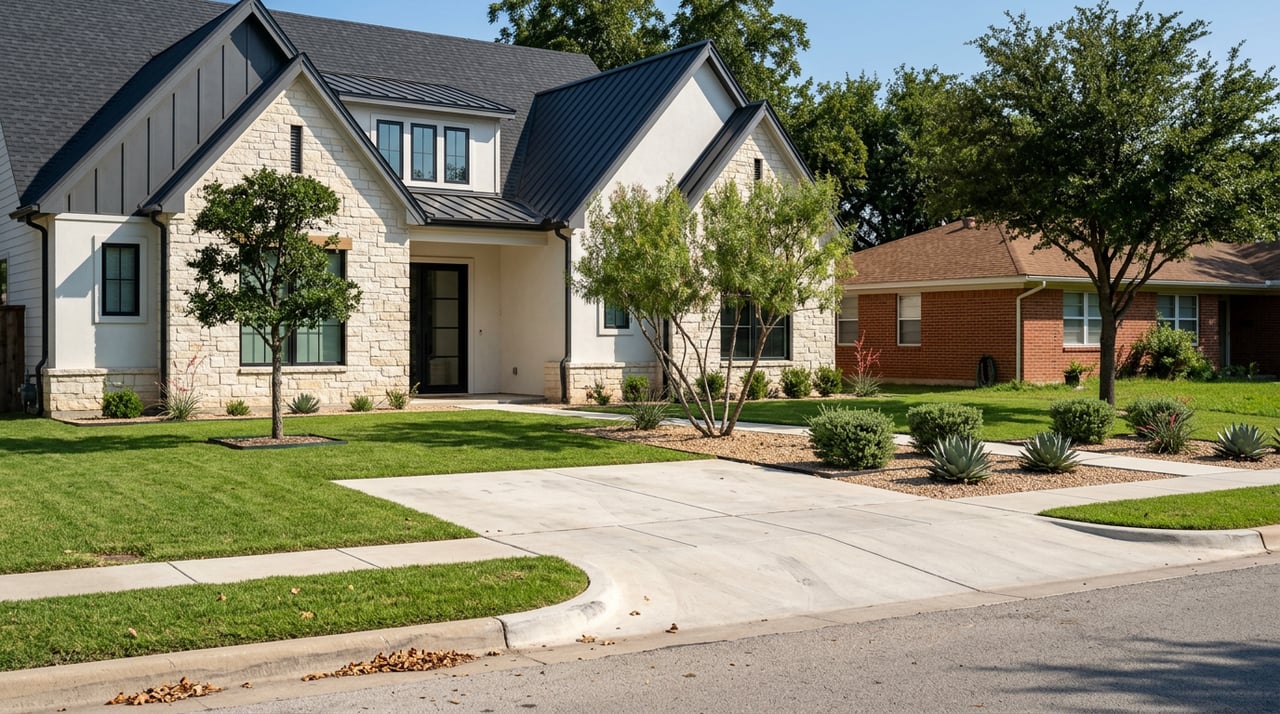
Trying to decide between a brand-new build or a move-in ready resale in Odessa? You are not alone. With prices in the low-to-mid $200Ks to $300Ks and options across Ector County, it can be tough to see which path gives you the best value. In this guide, you will learn how new construction and resales compare on price, incentives, timelines, warranties, and contracts in Texas. Let’s dive in.
Odessa market snapshot
Recent portal data shows a citywide median asking price around $307,000 and a median price per square foot near $160. New construction in many Odessa subdivisions often falls in the 160 to 190 dollars per square foot range for production or semi-custom communities. Resale averages can look similar citywide, but individual homes vary based on age, lot size, and upgrades.
Inventory and days on market point to a balanced setting in many price bands. Your negotiating power will depend on the neighborhood, the type of seller, and how long the home has been listed. Use sold comps in the same micro-area and watch current days on market to estimate room for concessions.
What you get with new construction in Odessa
Builders and where homes are going up
You will find active communities from volume builders like D.R. Horton in areas such as Yukon Ridge and Homestead at Parks Bell Ranch, along with regional and local teams like Betenbough Homes and Rosas New Homes. Builder pages list model homes, quick-move inventory, and to-be-built plans across west, north, and east Odessa corridors. You can browse representative features and pricing on the D.R. Horton Yukon Ridge page for context on current offerings and base inclusions.
- See example community details on the D.R. Horton Yukon Ridge page: sample floorplans and inclusions
- Explore semi-custom options and larger-lot products with Rosas New Homes in Odessa
Typical lots and finishes
- Production subdivisions often feature modest single-family lots around 0.12 to 0.22 acre. Expect smaller lots on quick-build plans and compact products.
- Semi-custom and custom areas commonly offer 0.2 to 0.4 acre lots, and rural or estate-style subdivisions may offer 1 acre or more.
- Standard finishes in production homes often include shaker-style cabinets, laminate or LVP in main areas, granite or quartz counters, stainless appliances, smart-home starter kits, and upgraded insulation or tankless water heaters on some plans. Upgrades like tile packages, extended patios, or higher-end mechanicals are available for added cost.
Build timelines and what to plan for
- Spec homes already underway can finish in about 4 to 7 months. A build-to-order plan commonly takes 5 to 9 months. Fully custom projects can run 10 to 18 months or more depending on complexity and permits. These ranges align with Texas construction guidance from BHC Construction.
- Builders often post target completion dates on listings. Treat those as estimates unless delivery remedies are written into the contract. Always ask for a written schedule and clarify what happens if the date slips.
Local site considerations
West Texas soils can include clay profiles that affect slab foundations. Pay attention to drainage and site preparation, and budget for geotechnical recommendations if you are building on a larger lot. Local advisors note these conditions and the need for foundation-focused planning in Odessa. For a primer, see this overview on local building expectations and soils.
What you get with a resale in Odessa
Common advantages
- Immediate occupancy and mature landscaping are big draws. Some resales offer larger lots for the same price band.
- You can often negotiate on price, repairs, and timing when days on market are higher. Inventory levels and listing age shape your leverage.
Common tradeoffs
- Older systems may need near-term replacement. Budget for inspection, roof or HVAC life-cycle updates, water heater age, and the possibility of foundation work on some properties.
- You may want to plan cosmetic updates if the layout or finishes are dated compared with modern plans.
Costs and incentives: new vs resale
What builders often offer
Builders commonly advertise incentives like temporary rate buydowns, closing cost or prepaid credits, and targeted upgrade packages on quick-move homes. Bigger incentives are often tied to using a preferred lender. The fine print matters, so get every offer in writing.
What influences resale negotiations
Resale leverage hinges on months of inventory and days on market in your micro-area and price range. When supply is higher or a listing sits longer, you may gain room on price, seller-paid repairs, closing costs, or timing.
How to compare apples to apples
Convert the options to a common metric: your net cost over the first 5 to 7 years.
- Factor the real monthly payment if a builder offers a rate buydown.
- Estimate energy-use savings for a new home.
- Add near-term maintenance or upgrade costs likely on an older resale.
- Compare the result to the negotiated resale price plus repair credits.
This quick model helps you see whether a builder incentive today is worth more than a discount on a resale.
Warranties, contracts, and Texas specifics
New-home warranty basics
Most builders follow a 1-2-10 structure: 1 year on workmanship and materials, 2 years on major systems, and 10 years on major structural defects. Many enroll homes with third-party providers that back the structural piece. For reference, see StrucSure’s overview of the 1-2-10 model. You can also confirm transfer rules and claim processes with third-party administrators like 2-10 HBW.
An important Texas law change
Texas legislation effective in 2023 allows a shorter six-year statute of repose for many residential construction claims if the builder provides a qualifying written warranty. Some builders may offer 1-2-6 coverage rather than a full 1-2-10 structure. Understand how this affects claim deadlines and remedies. For a legal summary, review this Texas legislative update on residential construction.
Texas also has specific pre-suit notice and inspection requirements for construction-related claims under the RCLA. If your contract includes arbitration or other dispute steps, learn the timelines and procedures in advance. You can read an overview of RCLA procedures.
Contracts you will see in Texas
- New construction typically uses promulgated Texas Real Estate Commission new-home contract forms. Resales use the One-to-Four Family Residential Contract. Review deadlines, inspection options, delivery and occupancy clauses, and any builder addenda. You can view official forms at the TREC contract library.
- Watch for clauses on delivery delays, change-order pricing, deposits for upgrades, and whether incentives require a preferred lender. Get these items in writing in the contract or addenda.
Smart steps before you sign
- Ask for the full written warranty booklet and any third-party enrollment documents.
- Have your buyer’s agent review the contract. Consider attorney review for arbitration, remedy, and warranty language.
- Plan independent inspections: pre-drywall if possible, a final inspection before closing, and an 11-month inspection to catch items within the typical 1-year workmanship window.
How to decide: a quick framework
Choose new construction if you want:
- Lower short-term maintenance risk and modern layouts.
- A predictable move-in date with quick-move inventory.
- Potential incentives that improve your early payment or closing costs.
Choose a resale if you want:
- Immediate occupancy with fewer construction-phase disruptions.
- A larger lot or established landscaping in the same price band.
- More room to negotiate on price or repairs when days on market are higher.
If you prioritize location or lot size above all else, a resale or a semi-custom build on a larger parcel may fit you best. If you value turnkey systems and minimal near-term projects, a new build is often worth the premium.
Odessa buyer checklist
- Benchmark pricing using multiple sources. Compare the builder’s price per square foot to closed resales in the same neighborhood and price band.
- Visit model homes. Ask for a written price sheet, upgrade menu with deadlines and deposits, and the full warranty booklet.
- Translate incentives and discounts into a 5-year cost comparison. Include mortgage terms, energy savings, and expected maintenance.
- Confirm the warranty type: 1-2-10 vs 1-2-6. Ask if structural coverage is third-party insured and what the claim process looks like.
- Review TREC forms and any builder addenda. Clarify delivery dates, remedies for delays, and appraisal or financing contingencies tied to incentives.
- Schedule inspections at key stages and again near month 11 to document warranty items.
Ready to compare real homes in Odessa and run the numbers side by side? Reach out to Marisa Florez, Realtor Golden Door Realty to tour options, review incentives, and negotiate with confidence.
FAQs
What is the typical price per square foot for new builds in Odessa?
- Many production communities advertise around 160 to 190 dollars per square foot, depending on plan, finishes, and location. Always compare against closed resales nearby in the same price band.
How long does it take to build a new home in Odessa?
- Quick-move spec homes may complete in about 4 to 7 months. A build-to-order plan commonly runs 5 to 9 months. Fully custom homes often take 10 to 18 months or longer, based on Texas construction timelines noted by industry sources like BHC Construction.
What incentives do Odessa builders offer and how should I compare them?
- Common offers include rate buydowns, closing cost credits, and upgrades. Convert each incentive into a 5 to 7-year net cost by factoring the payment change from buydowns, energy savings, and the avoided maintenance you might face on a resale.
What should I watch for in a Texas new-home contract?
- Review warranty coverage, delivery timelines and remedies, change-order pricing rules, arbitration or dispute steps, and lender conditions tied to incentives. See official forms at the TREC contract library.
Do Odessa soils affect foundations on new and resale homes?
- Clay-rich soils are common in West Texas and can impact slab performance. Ask about site prep, drainage, and any foundation treatments the builder includes, and consider an independent foundation-focused inspection. Learn more in this local soils overview.