Thinking about buying a small rental in Odessa but not sure how to tell if the numbers work? You are not alone. Odessa’s rental market can look promising, yet cash flow depends on careful analysis and a clear plan for swings in demand. In this guide, you will learn the exact steps and formulas to evaluate single‑family rentals, duplexes, and fourplexes in Odessa, plus local assumptions and worked examples you can copy. Let’s dive in.
Odessa rental snapshot
Odessa’s citywide averages point to a practical starting place for your math. Recent estimates place the average home value around $244,400 and the average asking rent near $1,537 per month. Property taxes are a key line item in Ector County, where a 2024 effective tax rate near 1.19% offers a useful planning number. You should verify parcel‑level taxes with the appraisal district, but this county estimate from ATTOM’s Odessa page is a good placeholder.
Who rents in Odessa? The City of Odessa’s housing and economic analysis shows a base across retail, educational services, accommodation and food, and health care and social assistance. The report also notes that rental demand is sensitive to oil price and rig count cycles. You can review the employment context and rent patterns by tract in the city’s fair housing and market analysis.
A practical tip: the Permian Basin remains the nation’s most active oil region, but rig counts fluctuate week to week. For rentals that cater to rotational workers, track the rig‑count trend and stress‑test your underwriting for a downshift.
How to evaluate small rentals
Key metrics and simple formulas
Use these straight‑forward calculations when you size up a listing:
- Gross annual rent (GR) = sum of monthly rents × 12.
- Vacancy and credit loss = GR × vacancy rate.
- Effective Gross Income (EGI) = GR − vacancy and credit loss.
- Operating expenses = sum of property tax, insurance, maintenance, management, utilities you pay, leasing/advertising, legal/accounting, HOA if applicable, repairs, and reserves.
- Net Operating Income (NOI) = EGI − operating expenses.
- Cap rate = NOI ÷ purchase price.
- Cash flow before tax = NOI − annual debt service.
- Cash‑on‑Cash (CoC) return = annual cash flow ÷ your total cash invested.
- Gross Rent Multiplier (GRM) = purchase price ÷ GR.
Quick screen with the 50% rule
For 1–4 unit rentals, a fast rule of thumb says operating expenses often land near 50% of gross rent. It is a screening shortcut, not a substitute for a full pro‑forma, and local taxes or insurance can push the ratio higher. You can read more about this investor rule of thumb on Mashvisor’s quick guides.
Vacancy is another key input. Underwrite 5–10% vacancy for well‑located long‑term rentals and consider higher for older buildings or properties tied to seasonal job flows. See practical ranges in this deal analysis overview.
Odessa‑specific underwriting assumptions
Build your pro‑forma with realistic local line items. These planning numbers can help you start the model before you collect quotes and parcel data:
- Property tax. Use the parcel’s actual tax rate and appraised value. For screening, the county’s 2024 effective rate near 1.19% is a useful placeholder, sourced from ATTOM’s Odessa data.
- Insurance. Texas premiums vary widely. Many investors plug in 0.3–0.8% of value as a planning estimate, then replace it with a local quote.
- Maintenance and repairs. Budget 1–2% of property value annually or set a per‑unit reserve. See ranges in the deal analysis overview.
- Property management. Plan on 8–12% of gross rent for SFRs with third‑party management. Small multifamily may negotiate a lower effective rate or a flat fee.
- Utilities. Many SFR tenants pay their own utilities. Duplexes and fourplexes sometimes keep water, sewer, trash, or landscaping on the owner side. Budget accordingly.
- Turnover and leasing. Allow for advertising and make‑ready costs plus one or more months of vacancy every 1–3 years.
- Capital expenditures. Set aside reserves for big‑ticket items like roof or HVAC. A simple starting point is $250–$500 per unit per year.
A good process is to screen with the 50% rule, then replace every estimate with a documented line item as you move toward an offer.
What rents you need at your price
You can reverse‑engineer the rent you need to hit a target cap rate at a given price. If vacancy = v and your expense ratio (operating expenses ÷ GR) = e, then:
- NOI ≈ GR × (1 − v − e)
- To hit a cap rate r at price P, solve for GR: GR = (r × P) ÷ (1 − v − e)
This quick test helps you answer, “At this price, what total monthly rent must the property produce?” It is especially helpful when screening duplexes and fourplexes where unit rents are easier to compare.
Worked examples with Odessa numbers
Below are simple illustrations based on Odessa‑level aggregates and common underwriting assumptions. Update each one with actual listing data, current quotes, and parcel taxes before you make an offer.
Single‑family rental at the city median
Assume a purchase price of about $244,427 and a monthly rent of $1,537. That yields gross annual rent of $18,444. If you underwrite 7% vacancy, your effective gross income is about $17,174. Using the 50% rule for a fast screen, operating expenses would be around $9,222, which leaves an NOI near $7,952. That implies a cap rate close to 3.3% at the assumed price.
Takeaway: at median price and rent, a typical SFR in Odessa produces a low cap rate. If you finance at 80% loan‑to‑value, annual debt service often exceeds NOI, so cash flow may be negative unless you find higher rents, a lower purchase price, or more favorable financing.
Duplex targeting a 6% cap
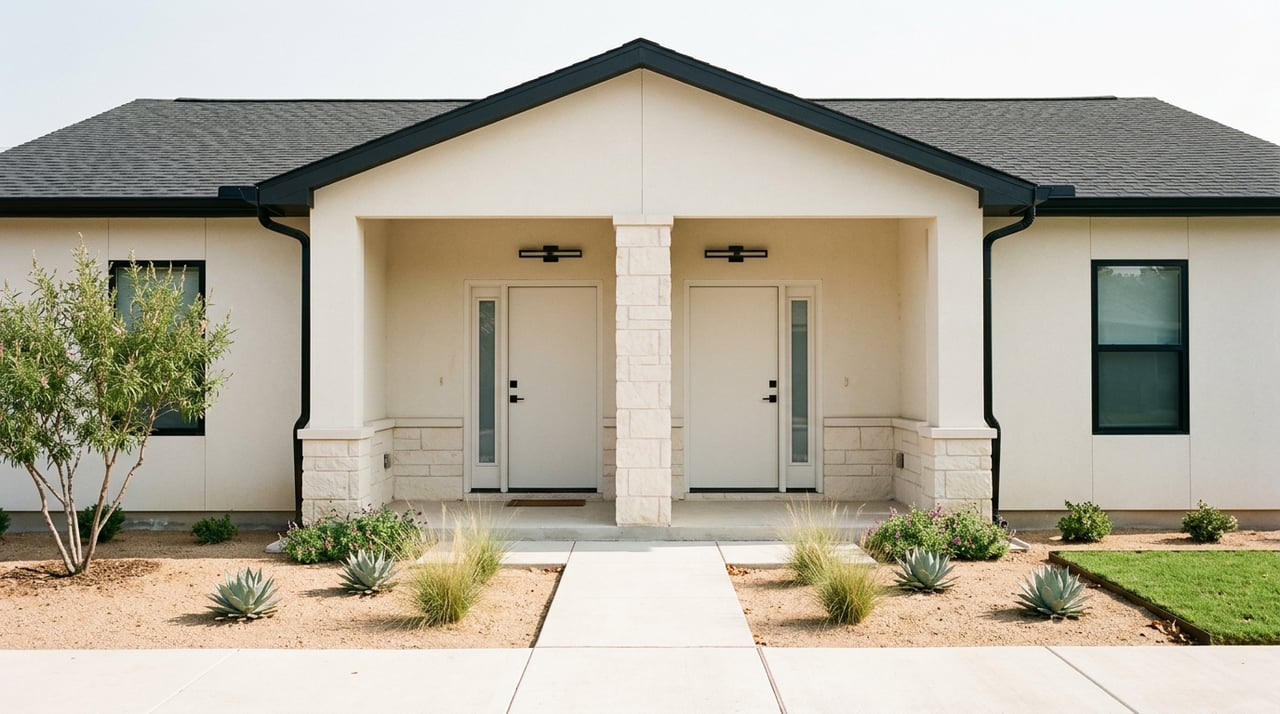
Assume a $260,000 purchase price, a 7% vacancy allowance, and a 50% expense ratio for screening. To achieve a 6% cap rate, you need NOI of $15,600. Using the formula above, the required gross rent is roughly $36,280 per year, or about $3,023 per month total. That works out to approximately $1,512 per unit per month for a two‑unit duplex. If actual comps support that rent, a 6% cap is achievable at the assumed price. If market rents are lower, the price must come down or you must add value to raise rents.
Fourplex at scale with the same target
With a $520,000 fourplex and the same underwriting inputs, a 6% cap requires about $72,560 in gross annual rent. That equals roughly $6,047 per month total, or around $1,512 per unit per month for four units. Management efficiencies may be better on a fourplex, but the per‑unit rent requirement is driven by your price and cap‑rate goal.
Stress‑test before you buy
- Energy‑driven demand swings. Odessa’s rental demand is tied to Permian Basin activity. Review the weekly rig‑count trend and stress‑test for a 10–20% rent drop or a period of elevated vacancy in your worst‑case model.
- Financing sensitivity. Small changes in rate, loan‑to‑value, or amortization can flip your cash flow from positive to negative. Always model both cap rate and cash flow after debt.
- Condition and near‑term CapEx. Older or cheaper properties can need immediate repairs. Budget an up‑front repair allowance and maintain a CapEx reserve.
Step‑by‑step: Build a clean Odessa pro‑forma
Capture listing facts. Record the asking price, unit mix, and any stated rent or rent roll. Note the year built and any recent upgrades that affect maintenance and CapEx.
Pull taxes. Verify parcel‑level tax data with the appraisal district and use the Ector County effective rate from ATTOM as a planning check.
Set realistic rents. Use recent local comps and vacancy experience. The City’s market study includes rent context by tract, which you can reference here: Odessa housing and rent patterns.
Get quotes. Ask one or two local managers for management fees and average days to rent. Request an insurance quote and confirm utility responsibilities by unit.
Build two scenarios. Create a base case and a conservative case that uses lower rents, higher vacancy, and higher maintenance. Include summary metrics that matter to lenders and partners: NOI, cap rate, cash flow, cash‑on‑cash, and DSCR.
Decide your move. If the deal clears your return hurdle in both base and conservative cases, proceed to due diligence. If not, adjust the price target or pass.
Want a simple one‑page template? Reach out and request a pro‑forma worksheet you can fill in with live listing numbers, parcel taxes, and quotes.
Where to look for stable demand
To smooth out the energy cycle, many investors focus near steady employers, such as medical centers, school districts, and higher education. Areas close to daily‑needs retail and major road access can also help reduce vacancy and turnover times. The City’s analysis offers helpful maps and context to support a location strategy without relying on guesswork.
Bottom line for Odessa rentals
Small rentals in Odessa can perform well when you buy at the right basis, set accurate rents, and budget real‑world expenses. Use the simple formulas in this guide to screen quickly, then replace every estimate with tax records, quotes, and comps. Stress‑test for an energy downshift and a rate change before you commit. If you want a local, data‑driven second set of eyes on a prospective deal, connect with Marisa Florez, Realtor Golden Door Realty for a consultative walkthrough of your numbers.
FAQs
What is a good cap rate for small rentals in Odessa?
- Many local investors target around 6% cap or higher, but actual targets vary by property type, condition, and your financing; always confirm with your pro‑forma and stress tests.
How do Ector County property taxes affect returns on Odessa rentals?
- Taxes are often your largest operating line item, so use parcel‑level data and plan with the county’s effective rate near 1.19% as a screening check from ATTOM.
What vacancy rate should I use when underwriting Odessa duplexes and fourplexes?
- A common range is 5–10% for well‑located long‑term rentals, with higher assumptions for older buildings or submarkets tied to seasonal job flows.
How do oil price and rig‑count swings impact small rentals in Odessa?
- They can affect short‑term demand and rents, so monitor the Permian rig‑count trend and test your deal for a 10–20% rent drop or longer lease‑up times.
Duplex vs. fourplex in Odessa: which is better for a first purchase?
- A fourplex can offer scale and potential management efficiencies, while a duplex may have a lower entry price; compare per‑unit rent needs and total cash invested to your goals.