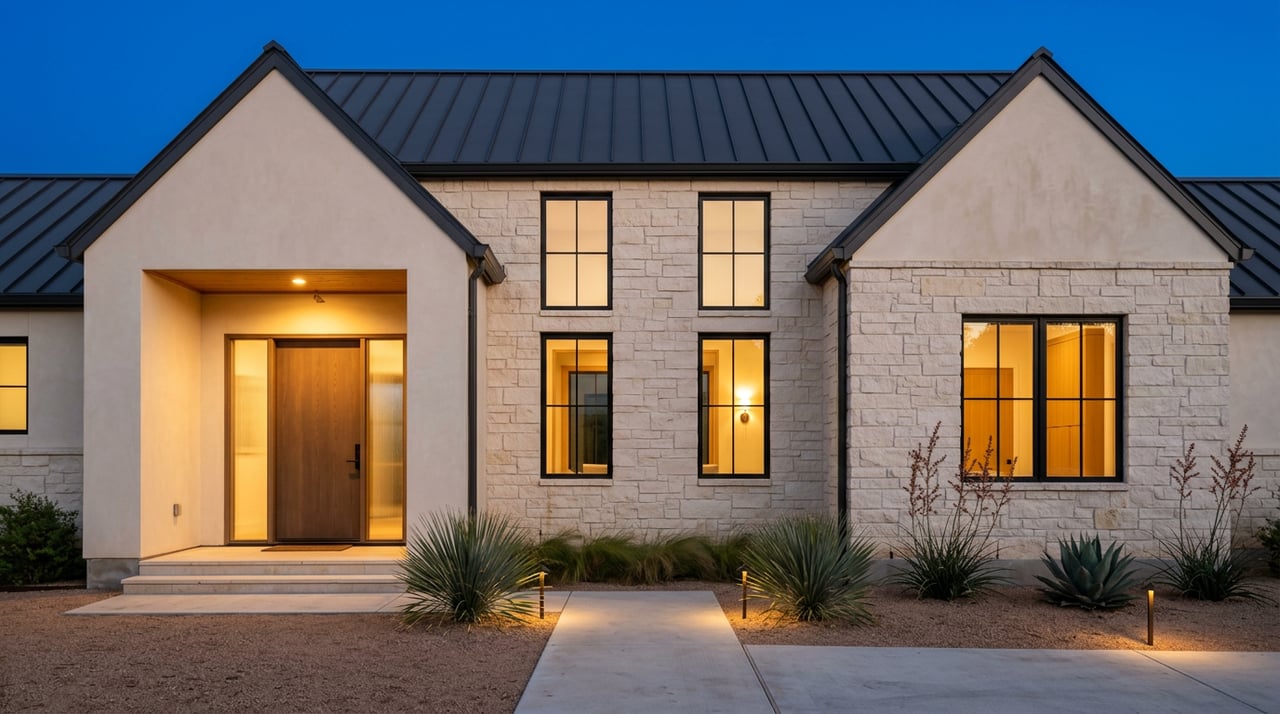
It is the first Monday of August. The sun clears the Sierra Diablo ridge around 8:30, the pavement on Broadway stops radiating an hour later, and by 9:45 the sky has done something that most Texans forget is possible. It has gone genuinely dark. Not parking-lot dark. Milky-Way-across-the-windshield dark.
If you have lived here a while, you know that already. What is worth saying out loud is why our August nights read the way they do, and how to spend one without driving further than you need to.
The sky is dark on purpose
Van Horn sits at about 4,010 feet, which is high enough that the air cools quickly after sundown and holds less haze than the flats east of us. Elevation is half the story. The other half is a lighting ordinance most people who live here have never read.
Culberson County is one of a small group of West Texas jurisdictions with an outdoor-lighting rule shaped by Bill Wren, who has helped draft outdoor-lighting ordinances in Alpine, El Paso, Marfa, Midland and Van Horn and in Brewster, Culberson, Hudspeth, Jeff Davis and Presidio counties. He works out of the University of Texas McDonald Observatory ninety miles south of us, and the point of the rule is not aesthetic. The atmosphere scatters light from across the region, making the background sky grow brighter, and the resulting sky glow hinders scientists' ability to observe distant galaxies through even the most powerful telescopes.
That is why the fixtures on Broadway aim down, and why the sky above town holds up so well against a place as small as ours. On a clear night the Milky Way reads to the naked eye as a river of light stretching across the sky, with satellites drifting by like slow-moving stars, not a smudge.
Dinner, before it matters where you look
August is one of the few months when the dinner hour and blue hour do not overlap. You can eat a full sit-down meal and still walk outside to a sky that has just tipped from cobalt to black.
The El Capitan side of Broadway
The Hotel El Capitan at 100 E. Broadway is the closest thing town has to a fine-dining room, and locals mostly treat it as one. The kitchen leans on a few workhorse plates that show up in almost every review of the place: pecan-crusted salmon, chipotle raspberry pork chop, and a pistachio-crusted steak. Henry's, the full bar, keeps creative cocktails, Texas wines, and craft brews, and there is a historic vault located behind the bar worth another look if you have not stopped in a while.
The building itself is a 1930s Spanish Colonial Revival. The lobby sets the tone with European tile floors, wrought-iron banisters, and exposed vigas under tall ceilings. It is the sort of room that makes a Tuesday feel like a small occasion, which is a useful thing for a town of about 2,043 people to have.
The Chuy's side of Broadway
Out on the west edge of town at I-10 exit 138, Chuy's is the other institution. Jesus "Chuy" Uranga opened it in 1959, a full 23 years before the chain of the same name opened in Austin, and Chuy's son Paul Uranga runs it now. The John Madden story you already know. The short version for out-of-town guests: Madden lost his television signal on a Monday night in 1987, saw the "TV Room" sign, pulled the Madden Cruiser off I-10, and made Chuy's an annual stop every year for the next two decades. The wall of memorabilia and the reserved throne-style chair are still there, and Madden's favorite plate on the menu, Chicken Picado, is still there as No. 21.
Order the No. 21 once for the story. Order the chile relleno the next time because it is the better plate.
The twenty minutes between dinner and dark
Walk out of El Capitan, turn left, and you have about a fifteen-minute window before you need to be somewhere with less light. The stretch of Broadway between the hotel and the Clark Hotel Museum is the best-preserved block of the old highway era in Culberson County, and it reads best in that half-light. The Culberson County Courthouse is a beautiful example of early 20th-century architecture, and the Clark Hotel Museum offers a glimpse into the town's past. The low storefronts on the same block include 213 E. Broadway, home of the Van Horn Advocate, the weekly paper that has been published continuously since 1910.
If you have people in from out of town, this is the walk. It takes ten minutes and puts them into the right frame of mind before you drive them out to look up.
Where to actually watch
The good news is that you do not need to drive far. The town's lighting cooperates. The better news is that a mile or two makes a noticeable difference.
- North on Highway 54. Pull off past the last streetlight, roughly two to three miles out. You are still close enough to bail if a thunderhead rolls in off the Guadalupes, which happens often in monsoon season.
- South on Highway 90 toward Van Horn Wells. Slightly darker, slightly further from services. Good for the Perseid peak nights when you want a full horizon.
- The Culberson County Airport frontage. Not officially anything, but the road out there is flat, unlit, and clear of tall brush on the north side.
Bring a red flashlight or set your phone to red mode. Your night vision takes about twenty minutes to fully adjust, and one unshielded phone screen resets everyone in the group.
What is overhead this month
August is the good month. The Perseids in mid-August are arguably the year's best shower, reliably active and warm enough to watch comfortably. Under skies as clean as ours a patient watcher will pick up meteors at a rate closer to the theoretical maximum than most Americans ever see. The most dramatic Milky Way views, with the galactic core overhead, happen June through August, and August still gives you all of that with slightly earlier sunsets than July.
Two free tools worth having open on the drive:
The ISS is bright enough to cast a faint shadow on the ground, and NASA's Spot the Station tool lets you see exactly when it will pass over your location. Enter Van Horn once and it remembers.
Sky Map or Star Walk 2 will overlay constellations, planets, stars, and satellites onto whatever part of the sky you point your phone at. The apps are more useful here than in a city because you can actually see everything they are labeling.
If you want to make a night of it
An hour north on Highway 54 gets you to Pine Springs at the base of Guadalupe Mountains National Park. Summer is the least-crowded season at the park, and nights remain comfortable in the 60s at Pine Springs, cooler up at Dog Canyon, offering relief from the daytime heat. The trade-off is the monsoon pattern. July and August afternoons bring thunderstorms, brief downpours, and lightning, so plan around them and be prepared to take shelter from storms. If the sky is holding at 8 p.m., the McKittrick Canyon parking area after sunset is a legitimate stargazing pad with no light source in any direction.
You do not need to go that far to have a good night. You just need to know it is there.
The through-line
August in Van Horn is not a season most towns market. Ours is the rare place where the calendar, the elevation, and a piece of county code all point at the same thing: a dark sky, a short drive, and a dinner you can actually linger over because it is not a hundred and four degrees at eight in the evening. That combination does not exist ninety miles in any direction.
If you own a home here, that is already part of what you bought, whether you have named it that way or not. If you are thinking about the property side of what living here means, or you have friends asking why you stay, Marisa Florez is happy to talk through what the Van Horn market looks like right now. Get Your Instant Home Valuation whenever you are ready.